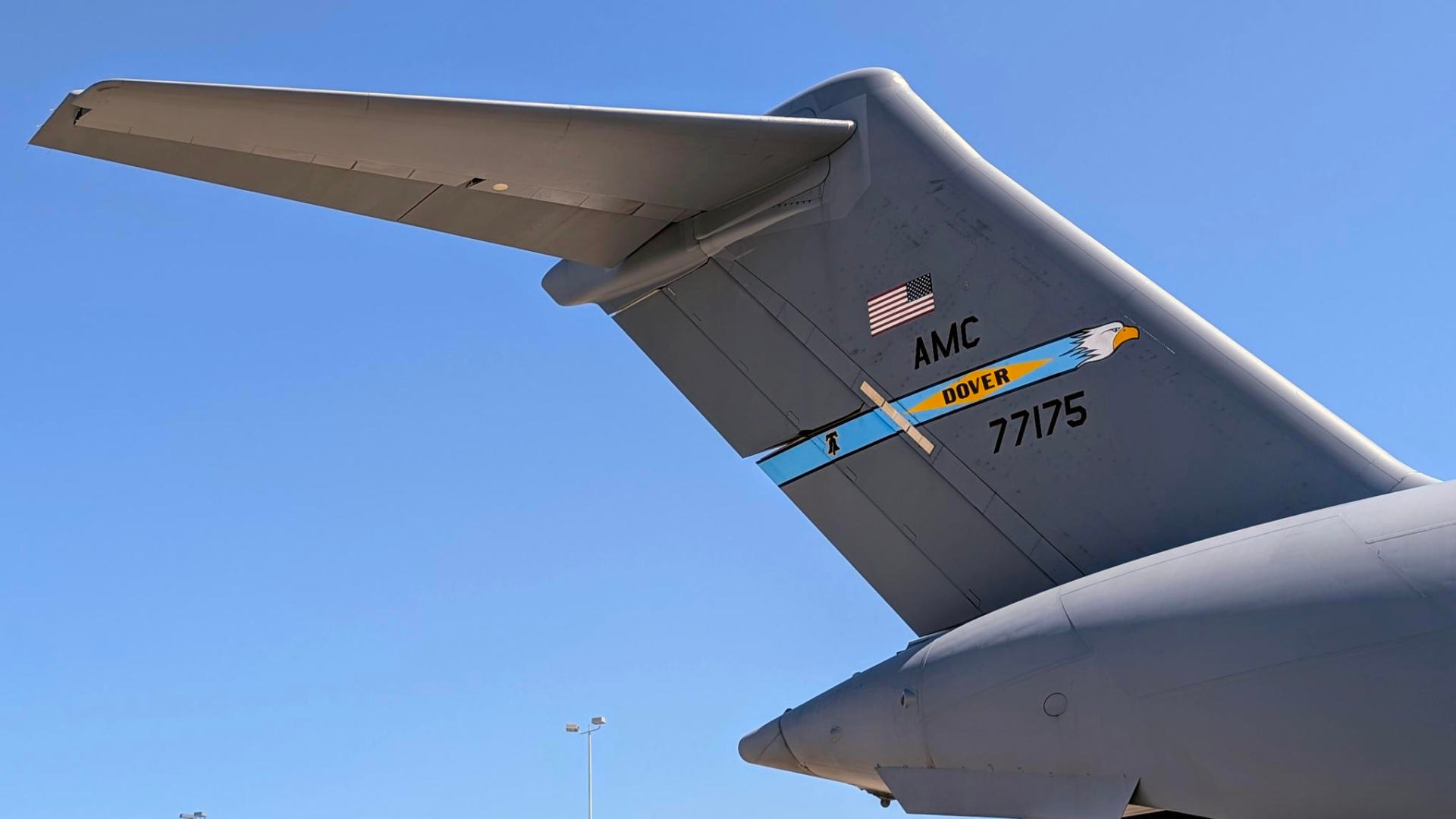
Global mobility has always been one of the most complex missions in the defense enterprise. Moving people, equipment, supplies, and mission-critical cargo across continents and oceans requires constant coordination across air, land, sea, bases, ports, maintenance operations, infrastructure, and mission priorities.
But the next challenge in defense logistics is not only about moving assets faster. It is about understanding the mission impact of every disruption faster.
A delayed aircraft. A maintenance backlog. A congested port. A change in cargo priority. A weather event. A disruption along a critical route. Each of these events may appear isolated when viewed inside a single system. In reality, each can create downstream effects across transportation assets, cargo movements, operational timelines, and mission outcomes.
For analysts and planners supporting global mobility operations, the problem is rarely a lack of data. The problem is that the data needed to understand the full operational picture often lives in different systems, uses different terminology, and reflects different slices of the mission.
Airlift scheduling systems may know where aircraft are assigned. Sealift systems may track vessel movements. Cargo platforms may show what needs to move and when. Maintenance systems may indicate readiness constraints. Port operations platforms may capture throughput limitations or congestion. External sources may add weather, intelligence, or infrastructure context.
Individually, each source may be valuable. Together, they should provide a clearer view of the mission. But when those systems remain disconnected, analysts are often left manually correlating data, reconciling terminology, and relying on institutional knowledge to determine what is happening and what may be affected next.
That manual work takes time. In operational environments where tempo matters, time spent assembling context is time not spent making decisions.
From Data Aggregation to Mission Understanding
Traditional data integration often focuses on bringing information together. That is necessary, but it is not always sufficient.
For defense logistics, the more important question is not simply, “Can we see the data?” It is, “Can we understand what the data means in a mission context?” That distinction matters.
A logistics analyst does not only need to know that an aircraft is delayed. The analyst needs to know which cargo was assigned to that aircraft, which mission that cargo supports, whether another transportation asset is available, whether the receiving port or base can support a change in schedule, and whether the delay creates risk to a broader operational objective.
Answering those questions requires more than dashboards or static reports. It requires a way to represent the relationships between assets, infrastructure, cargo, routes, missions, and risks.
This is where semantic technologies, including ontologies and knowledge graphs, can play a powerful role.
What Ontologies and Knowledge Graphs Bring to Defense Logistics
An ontology provides a shared model for understanding a mission domain. In the context of logistics, it defines the key entities that matter (such as aircraft, vessels, cargo, ports, bases, routes, missions, maintenance events, and operational objectives) and describes how those entities relate to one another.
For example, an ontology can define that aircraft and vessels transport cargo, that cargo supports specific missions, that missions depend on delivery timelines, that transportation assets operate from bases and ports, and that maintenance or infrastructure conditions can affect asset availability.
This shared model creates a common semantic foundation across systems that may otherwise describe similar concepts in different ways.
A knowledge graph then uses that model to connect real data across the logistics enterprise. Instead of storing information only as isolated records in separate systems, a knowledge graph represents data as a network of interconnected entities and relationships.
That network can show how a maintenance issue at one airlift hub could affect a specific aircraft, how that aircraft is connected to mission-critical cargo, how that cargo supports a specific operational requirement, and how a delay could affect mission timelines elsewhere.
In other words, a knowledge graph helps shift the question from “Where is the data?” to “What does this event mean for the mission?”
Why This Matters for Global Mobility
Global mobility operations depend on coordination across multiple systems, organizations, geographies, and modes of transportation. They also operate in dynamic environments where conditions can change quickly.
When disruption occurs, planners and analysts need to understand dependencies fast. They need to trace the potential impact of delays, identify alternate options, and assess risk before operational timelines are affected.
In a fragmented data environment, that type of analysis can be slow and manual. Analysts may need to check several systems, reconcile inconsistent terminology, export data into spreadsheets, and consult subject matter experts to understand how one change affects another part of the network.
A semantic data architecture can reduce that burden.
By aligning data to a shared logistics ontology and representing operational dependencies in a knowledge graph, organizations can give analysts a more connected and mission-aware view of the transportation network. Analysts can ask more complex operational questions, such as:
- Which transportation assets are supporting this mission?
- Which cargo movements depend on those assets?
- Which bases, ports, or routes are involved?
- Which maintenance issues or infrastructure constraints could create delays?
- Which missions may be affected if a specific aircraft, vessel, or port becomes unavailable?
These are not just data questions. They are mission questions.
Making Predictive Insight More Actionable
Ontologies and knowledge graphs can also strengthen the value of predictive analytics.
Predictive models may identify the probability of maintenance delays, port congestion, weather disruption, or capacity shortfalls. But those predictions become more operationally useful when they are connected to the assets, cargo, missions, and infrastructure they may affect.
A prediction that a port may experience congestion is useful. A connected view showing which cargo, vessels, receiving units, and mission timelines could be affected by that congestion is far more actionable.
By placing predictive signals inside a knowledge graph, organizations can help analysts move from identifying possible disruptions to understanding their operational consequences.
This creates a stronger foundation for decision support. It helps planners anticipate risk earlier, evaluate alternatives faster, and make more informed adjustments before disruption becomes mission delay.
Building on Existing Systems, Not Replacing Them
One of the most practical advantages of this approach is that it does not require organizations to replace every existing logistics platform.
Defense organizations have made significant investments in operational systems built for specific missions and functions. Those systems will continue to matter. The opportunity is to create a semantic layer that connects them.
An ontology can serve as a translation framework across systems, while a knowledge graph provides a dynamic representation of the relationships between data elements. This allows organizations to preserve existing investments while enabling new forms of analysis that span system boundaries.
That approach is especially important in large, complex mission environments where modernization must happen without disrupting ongoing operations.
The Path from Data Silos to Mission Knowledge
For years, agencies and defense organizations have focused on breaking down data silos. That work remains essential. But the next stage is not only about connecting systems. It is about creating shared understanding across the mission.
In logistics, that means helping analysts see how transportation assets, infrastructure, cargo, and operational objectives depend on one another. It means reducing the manual work required to assemble context. It means giving decision-makers a faster way to understand what is at risk, where disruptions may propagate, and how to respond.
This is the promise of moving from data silos to mission knowledge.
___
At TechNet Mid-America, Dr. Pragyansmita Nayak, Chief Data Scientist at Hitachi Federal, will explore this topic in a breakout session titled “From Data Silos to Mission Knowledge: Enabling Logistics Intelligence with Ontologies and Knowledge Graphs.”
The session will demonstrate how ontologies and knowledge graphs can be applied to a realistic global mobility scenario, showing how fragmented logistics data can be aligned to a shared operational model and used to reveal dependencies across transportation assets, cargo, infrastructure, and mission objectives.
For defense leaders, logistics planners, data strategists, and mission technology teams, the session will offer a practical look at how semantic architectures can support faster insight, improved situational awareness, and more informed logistics planning.
Because in modern defense logistics, advantage will not come from collecting more data alone. It will come from turning that data into operational knowledge when the mission needs it most.
Attend the session:
From Data Silos to Mission Knowledge: Enabling Logistics Intelligence with Ontologies and Knowledge Graphs
Presenter: Dr. Pragyansmita Nayak, Chief Data Scientist, Hitachi Federal
Event: TechNet Mid-America 2026
Date/Time: June 25, 2026 @ 2:15pm CT